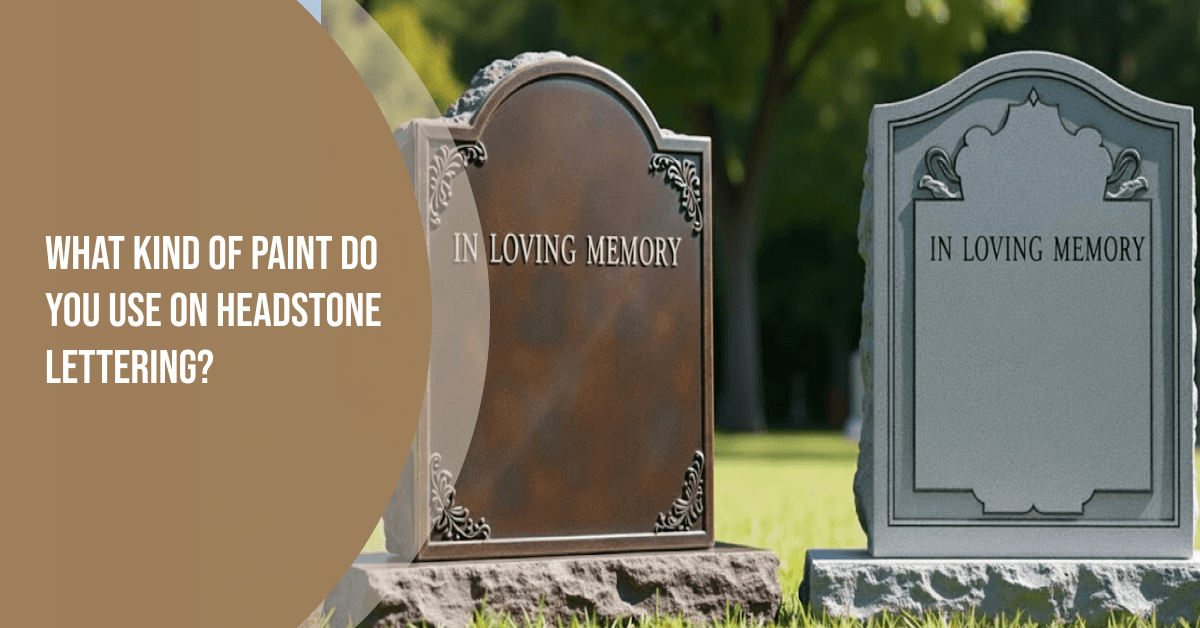
A headstone is a lasting tribute, but even the most durable granite eventually needs maintenance. One of the most common questions we receive from masons, restoration specialists, and families is: What kind of paint do you use on headstone lettering?
The inscriptions are the most vital part of any memorial. However, the harsh British weather, constant rain, frost, and UV rays can cause lettering to fade over time. Using the correct specialist headstone paint is crucial. Standard DIY store paints will peel within months. For professional results, you must use paints specifically formulated for masonry and stone adhesion.
This guide explores the specific types of gravestone paint, gold leaf, and enamels used by professionals. We will help you understand what makes a memorial inscription last for decades and identify the best paint for headstone lettering on the market.
The Science of Monument Lettering Paint
Painting stone is not the same as painting wood or metal. Stone is porous and "breathes," meaning moisture can travel through it. If you use the wrong paint for headstone projects, you trap moisture, causing the paint to bubble and flake off.
Why Regular Exterior Paint Fails on Stone?
Standard acrylics or latex paints found in hardware stores are not designed for the specific conditions of a cemetery. They lack the high-pigment load required to make fine lettering stand out. Furthermore, they often struggle to adhere to the highly polished surface of a granite headstone.
To ensure longevity, professionals use monument lettering paint with high UV resistance and specific adhesion promoters. These are designed to bond physically with the rough interior of sandblasted letters while withstanding freeze-thaw cycles. When searching for paint for a headstone in UK climates, moisture resistance is the single most important factor.
The Industry Standard: Lithichrome Paint and Enamels
For decades, Lithichrome paint was the generic trademark name for the go-to stone paint. It became synonymous with quality in the industry. While regulations have evolved, the term is still widely used to describe high-performance, solvent-based stone enamels.
Modern equivalents, often referred to as memorial headstone paint, are heavy-body lettering enamels. These solvent-based paints dry to a hard, glossy finish. They are incredibly durable against rain and do not fade easily. They are designed to "flow" smoothly into the V-cut of the letter, creating a seal that prevents moss growth.
Comparing the Best Paint Types for Different Stone Surfaces
Not all stones are treated equally. The paint for headstone restoration you choose for a polished black granite headstone will differ from what you use on a porous limestone marker.
Enamel Paint: The Go-To for Granite Inscriptions
For granite headstones, specifically those with a polished finish, solvent-based enamel is the best paint for headstone lettering.
- Durability: It forms a hard shell that resists scratching and weathering.
- Finish: It provides a high-gloss look that contrasts beautifully with the polished stone.
- Application: It is thick enough to fill the pores of the sandblasted area, creating a smooth, legible letter.
Many professionals often ask where to buy lithichrome paint for headstones. It is typically available through specialised masonry supply wholesalers rather than general paint shops. Ensuring you buy from a dedicated stone supplier ensures you get the genuine, weather-resistant formula.
Gold Leaf vs. Headstone Gold Paint: The Premium Standard
When clients ask for "gold lettering," there is often confusion between real gold leaf and headstone gold paint. Gold paint for headstones is essentially bronze powder mixed with a medium. While cheaper, it will eventually oxidize, turning brown or green over a few years.
Gold Leaf (23.5ct) is pure metal. It does not rust, tarnish, or fade. While some DIY enthusiasts search for Gold leaf paint, professionals know that true longevity comes from actual leaf, not liquid paint. However, if budget is a constraint, high-quality metallic enamels (often called liquid leaf) can be used as a headstone gold paint alternative, though they lack the brilliance of real gold.
Acrylic Masonry Paints: When to Use Them?
For softer, more porous stones like Nabresina, Portland limestone, or sandstone, enamels can sometimes be too hard. They might trap moisture inside the soft stone, causing the face of the stone to "blow" (flake off).
In these cases, a high-quality, breathable gravestone paint with an acrylic base is preferred. These allow moisture vapour to escape, preserving the integrity of the soft stone while still providing bold colour.
Selecting the Right Colour for Legibility and Contrast
The legibility of a memorial depends entirely on contrast. The colour of the headstone paint must stand out against the background colour of the stone.
High Contrast: White and Silver on Black Granite
For dark materials, such as Black, Dark Grey, or Blue Pearl granite, light colours are essential.
- White Enamel: The most traditional and legible choice. It offers the sharpest contrast against black stone.
- Silver/Aluminium Enamel: A popular alternative to white. It offers a modern, metallic look without the cost of platinum leaf. This is a common choice for paint for headstones in UK cemeteries where a modern aesthetic is preferred.
Subtle Definition: Black and Dark Grey on Light Stone
For white marble or light grey granite, white paint would be invisible.
- Black Enamel: This provides the highest contrast on light stones. It simulates the look of a shadow, making deep V-cut letters look crisp and readable.
- Dark Grey: A softer alternative to black, often used on historic buildings or churchyard memorials where a stark black contrast might look too "new."
Step-by-Step: How Professionals Apply and Restore Headstone Lettering
Applying monument lettering paint is a craft. Professionals don't just "paint within the lines"; they use specific techniques to ensure crisp edges.
Step 1: Cleaning and Degreasing the Inscription
Before applying any memorial headstones paint, the letters must be sterile. Old paint, moss, and wax must be removed.
- Use a wire brush (stainless steel) to scrape out loose old paint.
- Clean the area with a solvent (like acetone) to remove any oils or polish residue.
- Ensure the stone is bone dry. Moisture is the enemy of lithichrome paint adhesion.
Step 2: The Application (Flooding vs. Brushing)
Professionals often use the "flooding" technique. Instead of trying to paint perfectly inside the letter, the mason "floods" the indented letter with gravestone paint, allowing it to coat the inside thoroughly. It is acceptable if some paint gets onto the polished surface (the face) of the stone, as this will be cleaned off later. This ensures the letter is fully sealed.
Step 3: The Clean-Up (The Cuttlefish Bone Technique)
This is the secret to crisp lettering. Once the paint is semi-dry (tacky) or fully dry (depending on the paint type), the excess on the surface is removed.
- For Polished Granite: Masons often use a cuttlefish bone (natural calcium) or a specialized felt block with a mild abrasive powder.
- The Technique: You rub the face of the stone gently. The abrasive removes the excess headstone paint from the flat, polished surface but does not reach into the recessed letter.
- Result: Razor-sharp edges to the lettering without scratching the granite polish.
Maintenance Tips to Make Headstone Paint Last
Managing expectations is key for a memorial headstone supplier and their clients. Nothing outdoors lasts forever, but quality materials extend the lifespan significantly.
Factors Affecting Paint Lifespan in the UK Climate
- Location: A headstone under a tree (constant dripping and sap) will degrade faster than one in the open.
- Direction: South-facing stones endure more UV damage; North-facing stones endure more moss and damp.
- Paint Type: Gold leaf lasts 15-20+ years; High-quality Lithichrome paint lasts 7-10 years; Acrylics may last 5-7 years.
When to Repaint vs. When to Re-Gild?
If the paint is merely dirty, a soft wash with soapy water often restores brightness. However, if the paint for headstone lettering is cracking or peeling, it must be scraped out and redone. Painting over peeling paint will result in immediate failure.
For Gold Leaf, if the gold is dull, it likely needs a complete re-gild. Unlike gold paint for headstones, you cannot simply "touch up" gold leaf easily; it usually requires a full re-size and re-application for a uniform finish.
Conclusion: Partnering with Stone Discover UK for Quality Memorials
Choosing the best paint for headstone lettering is the final touch that defines a memorial's quality. Whether you are using Lithichrome paint enamels for a bold modern look or 23ct gold leaf for traditional elegance, the material matters.
At Stone Discover UK, we understand that the stone you start with is just as important as the finish you apply.
We are a leading memorial headstone supplier, providing premium granite headstones that provide the perfect canvas for your masonry skills. Our polished surfaces are prepared to ensure the best possible adhesion for your lettering paints, ensuring your work stands the test of time.
Are you looking for high-quality wholesale granite headstones ready for inscription? Contact Stone Discover UK today for our latest trade catalogue.