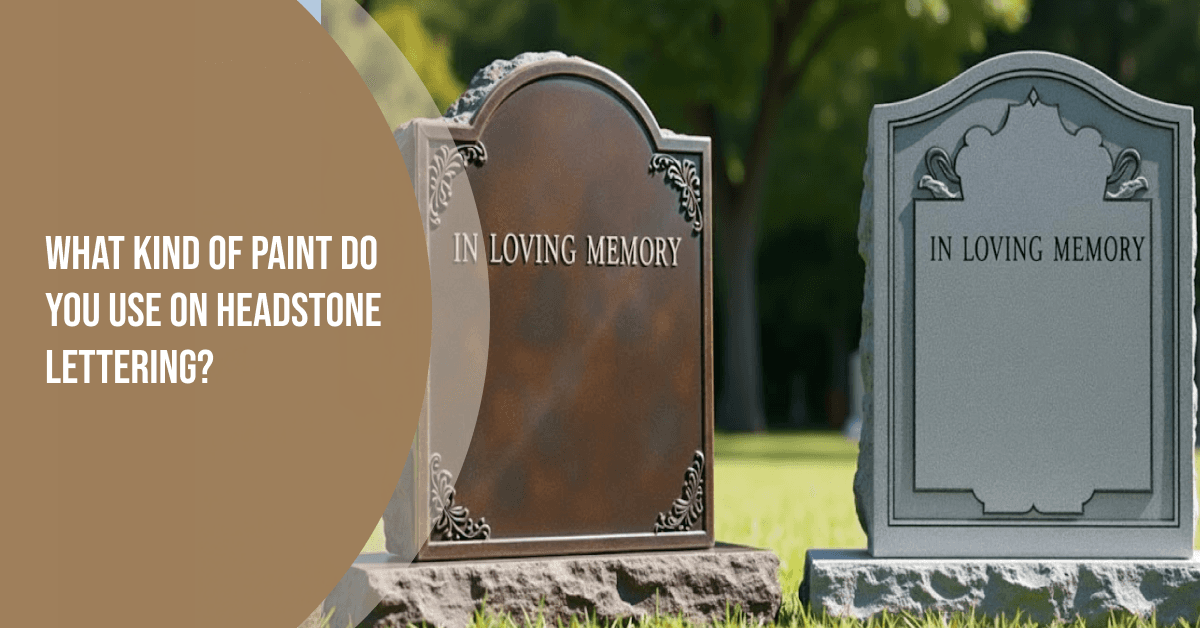
Every memorial dealer and monumental mason knows that the stone itself is only half the job. After the headstone is in place and the inscription continues to be installed, the quality of the lettering finish is what you can see as an indicator of the quality of your workmanship. Fading paint, a call back to the masons for re-gilding, and a barrage of warranty questions are all things families observe. All that is avoided from the outset by selecting the appropriate lettering finish.
The guide is designed specifically for the trade buyer: masons, memorial retailers and funeral directors, who wish to have a practical guide to the various types of lettering paint available, the types of stone that it will bond to, how it is applied, and what information to relay to the customer regarding longevity. It also covers the one area most competitor guides miss entirely, which is how the granite you supply affects paint adhesion and finish quality in the first place.
Why This Decision Matters More Than Most Masons Realise
The lettering finish on a granite headstone is the part of the memorial most exposed to the British climate. Constant moisture cycling, UV exposure, freeze-thaw in winter, and airborne pollutants in urban sites all work against any surface-applied coating. A bad paint selection will show its shortcomings within 2-3 seasons. Quality granite with a well-designed and correct finish will not require any maintenance for 10 years or more.
Also, the color of the paint will depend on the type of stone beneath it. This is the gap in almost all competitor content on this subject: most guides discuss paint products in isolation without linking them to stone type, surface finish, and engraving method. For trade buyers sourcing granite wholesale, this connection is critical.
The Four Main Lettering Finish Types Used in the UK Trade
1. Solvent-Based Stone Enamel (the UK trade standard)
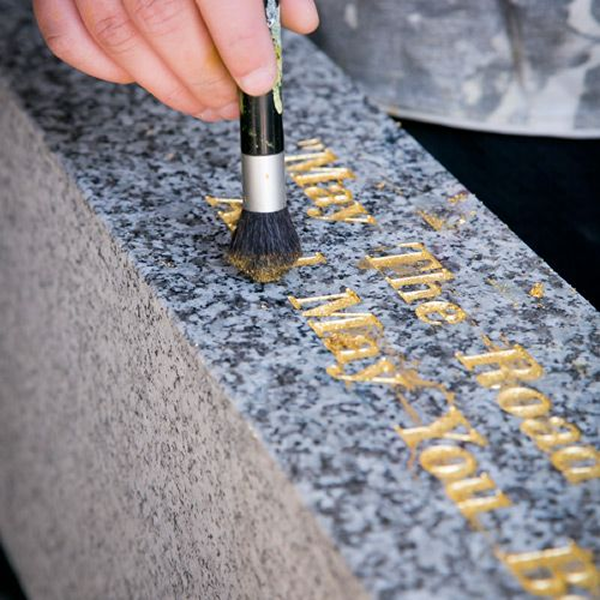
Solvent-based enamel, often referred to generically as Lithichrome paint after the product that established the category, remains the most widely used lettering finish for polished granite headstones in the UK. It hardens to a glossy and impervious surface when dry, it physically attaches itself to the rough inside of a sand blasted letter channel and is more colour resistant to UV than water-based versions.
For polished black, dark grey, or blue granite, this is the correct default choice. The high-gloss finish of the enamel complements the polished stone surface and provides the sharp contrast families expect from quality lettering.
Lifespan on granite: 7 to 12 years depending on site exposure and surface preparation quality.
2. Real Gold Leaf (23ct to 23.5ct)
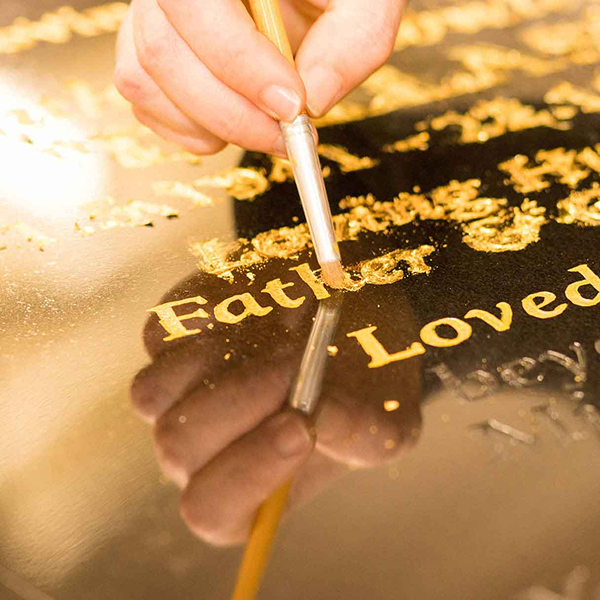
The standard for headstone lettering continues to be gold leaf and the distinction between using real gold leaf and any paint-based option is significant enough to explain to all trade customers. Real gold leaf will not rust, tarnish or fade. It is a color that is easy to keep without fading. No liquid paint product on the market can achieve the same visual depth and warmth as the genuine 23ct gold leaf on polished black granite.
Sizing the letter, applying the leaf, burnishing and cleaning up the application process takes more skill and time compared to painting. The outcome, though, is worth a pretty significant retail price premium, plus it saves on re-gilding callbacks for at least 15-20 years.
Lifespan on granite: 15 to 25 years or more with correct application and quality stone.
3. Metallic Enamel Paint (the gold paint alternative)
The metallic enamel is a mixture of bronze powder in a binding medium, also known as "liquid leaf" or "stonemason's gold paint. Suppliers like Goldfarben (Craig's Gold, Craig's Silver) produce products specifically for the use in memorial masonry, and are a positive and significant improvement over general purpose metallic paints. This is confirmed by feedback received from masons with years of experience, who said that the best of these products is much better than generic products and is a good, lower cost alternative to real leaf.
The practical trade-off: metallic enamels will eventually oxidise. Gold-toned paints can shift towards brown or green over several years in exposed positions. This is worth communicating clearly to customers at the point of sale so they understand the difference in price reflects a difference in longevity, not just material cost.
Lifespan on granite: 5 to 8 years depending on product quality and exposure.
4. Breathable Acrylic Masonry Paint
The solvent-based enamel is not advised for softer or more porous stones such as Nabresina, Portland limestone and sandstone. A hard enamel layer can form on porous stone and retain moisture behind it and behind the stone face causing degradation. A good breathable acrylic masonry paint will ensure water vapour can pass through, and yet remain clear and easily legible in colour. This type of finish is also suitable for some honed granite where the low surface density could create a less secure bond between the enamel and the granite.
Lifespan on porous stone: 5 to 7 years.
Paint Type Selection by Stone and Surface
| Stone Type | Surface Finish | Recommended Paint | Notes |
|---|---|---|---|
| Black or Dark Granite | Polished | Solvent enamel or real gold leaf | Highest contrast and best adhesion. |
| Grey Granite | Polished | Solvent enamel (white or silver) | Check Diocesan guidance for churchyards. |
| Grey Granite | Honed | Breathable acrylic or soft enamel | Honed surfaces reduce enamel bond strength. |
| Blue Granite (Bahama, Blue Pearl) | Polished | Gold leaf or metallic enamel | Gold tones provide excellent contrast against blue granite. |
| Red Granite (Paradiso) | Polished | White or silver enamel | Creates strong visual contrast with warm stone colours. |
| Nabresina or Portland Stone | Any | Breathable acrylic only | Enamel can trap moisture in porous stone. |
| Sandstone | Natural | Breathable acrylic only | Never use solvent-based paint on sandstone. |
For dealers sourcing granite wholesale, one of the most practical things you can do is match your paint recommendation to the granite variety you are supplying. Stone Discover UK stocks granite across all the colour types in the table above. Browse our full granite variety range for current options.
Colour Selection: Contrast Rules for UK Cemeteries
Legibility drives every colour decision. The rule is straightforward: choose the highest-contrast combination available for the stone colour in question.
White enamel offers the most striking contrast for dark granite (black, dark grey, dark blue), and is followed by silver metallic enamel. Metallic gold is used in traditional and religious memorials to a large extent and falls in the middle range of contrasts. Metallic gold is used in many traditional and religious memorials and has a medium contrast. Black or dark grey enamel is used with light granite or marble to provide the best definition.
Note for churchyard applications to faculty as masons: in historic churchyards, some Diocesan Advisory Committees prefer not to have lettering finishes that are too reflective. A satin, not too shiny, gold or white finish is safer for DAC submissions than a high gloss, gold.
Application: The Key Steps Trade Buyers Ask About
The application of stone enamel is the same, regardless of the colour. Scrub the letter channel with a stiff brush and solvent wash to get rid of any old paint, moss, wax residue or oil residue on the surface. Only start work after the stone is dry. The biggest cause for early failure is moisture under the paint.
Apply using the flooding technique: fill the recessed letter channel with paint rather than attempting to paint within the edges precisely. Allow overspill onto the polished face, which is removed in the clean-up stage. Once the paint is at the correct tack (semi-dry but not fully cured), use a cuttlefish bone or a felt block with mild abrasive powder to remove the surface overspill without touching the recessed letter. The abrasive clears the flat polished surface but cannot reach into the channel depth, producing a sharp edge without masking tape.
When applying gold leaf to a letter, apply a thin even size coat to the interior of the letter and allow enough time for the size to have the right tack (usually 20 to 40 minutes based on temperature and type of size). Lay the gold leaf in sections, burnish, and remove excess size. The surface preparation of granite is a key factor in the evenness of the size sets and whether the excess leaf comes off cleanly.
Case Study: How Surface Quality Affects Lettering Longevity
A memorial retailer in the West Midlands, who has been sourcing wholesale granite headstones from Stone Discover UK since 2024, shared this feedback after a particularly challenging season of callbacks.
"We had been buying polished black granite from two different suppliers alongside Stone Discover. One of them was cheaper per unit but the polish quality was inconsistent. When our masons applied enamel lettering on those stones, we were seeing adhesion failure within 18 months on around 15 to 20 percent of the orders. The same enamel product applied to Stone Discover's granite held without issue on every single memorial. When we looked at the stones side by side, the difference in polish density and consistency was obvious. We phased out the cheaper source entirely and haven't had a single lettering callback since."
The underlying issue in this case was inconsistent surface preparation at the factory level. Granite that has been polished to a high, consistent standard provides a predictable base for enamel adhesion. Granite with microscopic surface variation from inconsistent polishing creates differential adhesion that leads to early delamination. For wholesale buyers, this means that the polished surface specification of your granite stock directly affects the quality of your masons' lettering work and your own after-sale reputation.
All headstones supplied by Stone Discover UK are polished at our own manufacturing facility in Telangana, India, to a consistent standard across every batch. View our in-stock headstones or download the 2026 trade catalogue to review current specifications.
Maintenance Expectations: What to Tell Your Trade Customers
Setting accurate expectations at the point of sale prevents the majority of post-installation complaints. The key points to communicate:
With 15 or more years of virtually no maintenance, gold leaf is the only lettering finish that will do that. Does not tarnish and does not require reapplication every so often. To restore the brightness of enamel paint, use a soft brush and mild detergent if the paint is in good condition. If the enamel is peeling or cracking, it must be removed and re-applied, not painted over. Covering up the decaying enamel will not only not slow down further decay, but it will actually help it to happen sooner. The metallic gold paint will change color with time and generally should be reapplied every 5 to 8 years depending upon the exposure.
When talking with families about maintenance, place gold leaf as the best, long-term solution – and the one that will actually save them money and re-gilding trips. Quality solvent enamel is the safe and sensible middle ground choice with a reasonable service life.
The Granite Foundation Matters as Much as the Paint
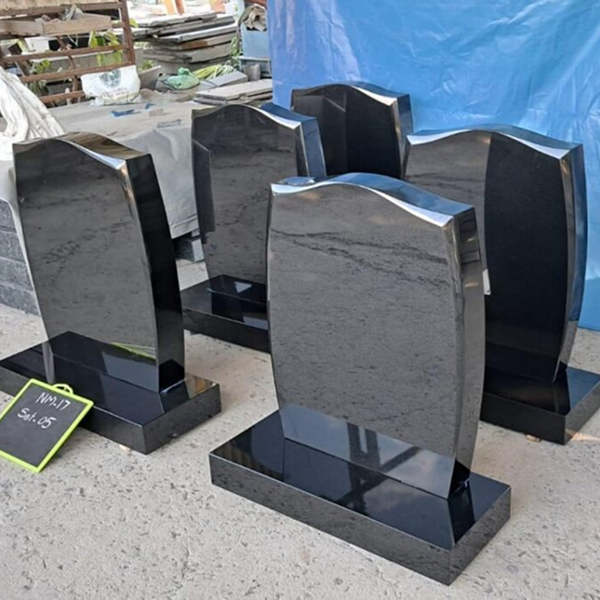
For memorial dealers and masons, the most actionable takeaway from this guide is straightforward: lettering finish quality starts with stone quality. The most technically correct paint application will underperform on granite with inconsistent polish. The combination of correctly specified granite and the right lettering finish for the stone type is what produces memorials that hold their quality over the long term.
.png)
Stone Discover UK supplies wholesale granite memorial headstones across the full range of shapes and granite varieties, polished to consistent trade standards at our own manufacturing facility, and stocked in UK warehouses for fast trade dispatch.
Ready to review our granite range or place a trade order? → Browse our full headstone range and Call +44 1613 941 594 | info@stonediscover.co.uk
Ready to Source Premium Headstones for Your UK Business?
We're a UK-based supplier with warehouses in Liverpool, London and Southampton, offering reliable headstones at trade pricing. We work with funeral directors, monument retailers and stone fabricators across the UK to build long-term partnerships based on trust and performance.
Frequently Asked Questions
What is the best paint for headstone lettering on polished black granite?
Solvent-based stone enamel in white or gold is the trade standard for polished black granite. For premium commissions, real 23ct gold leaf provides a finish that significantly outlasts any paint alternative.
Can I use regular exterior paint on a headstone?
No. Standard exterior paints lack the adhesion chemistry and UV resistance needed for stone surfaces, particularly the highly polished surfaces of granite memorials. They fail within one to two seasons in UK conditions.
How long does gold leaf last on a granite headstone?
When applied correctly to a well-polished granite surface, real gold leaf typically lasts 15 to 25 years before any maintenance is needed.
What paint should I use on sandstone or porous stone headstones?
Breathable acrylic masonry paint only. Solvent-based enamels trap moisture in porous stone and cause surface deterioration.
Where can I buy lithichrome paint in the UK?
Specialist masonry supply companies stock solvent-based stone enamel equivalents. Goldfarben (goldfarben.co.uk) is a UK-based trade supplier used by professional masons. Atlas Preservation supplies monument lettering paint to restoration trades.